
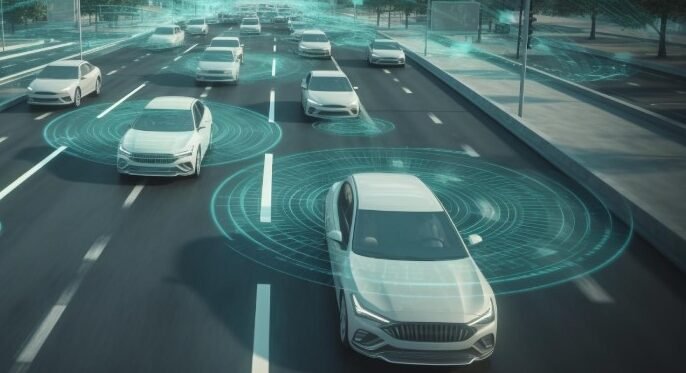
The future of transportation is here, and it’s self-driving. Autonomous vehicles (AVs) are rapidly changing the way we think about travel, safety, and mobility. From cutting-edge technology to regulatory hurdles, there’s a lot happening in the world of self-driving cars. But what does this mean for you, the everyday driver? Will autonomous vehicles revolutionize how we commute or become the norm in the next decade?
In this blog, we’ll explore the future of autonomous vehicles, how they work, the benefits they bring, and the challenges we must overcome to make them a reality on our roads.
What Are Autonomous Vehicles?

Autonomous vehicles (AVs), also known as self-driving cars, are vehicles that use a combination of sensors, cameras, radar, and artificial intelligence (AI) to navigate and drive without human intervention. These vehicles are designed to safely operate in urban environments, highways, and off-road scenarios, making self-driving cars one of the most exciting innovations of the 21st century.
While autonomous driving technology is still in development, several companies like Waymo, Tesla, and Cruise are at the forefront, rolling out driverless cars on the road. In fact, Waymo has already begun offering self-driving taxi services in certain cities.
How Do Self-Driving Cars Work?
At the heart of every self-driving car is a sophisticated AI system. This system processes data from the vehicle’s sensors, enabling it to “see” its surroundings, make decisions, and navigate safely. The technology behind self-driving cars operates on several levels:
- Sensors & Cameras: These systems detect everything around the vehicle, from other cars and pedestrians to road signs and obstacles.
- Machine Learning & AI: Using vast amounts of data, the AI can predict and adapt to various traffic scenarios, learning from both human driving patterns and other self-driving vehicles.
- Mapping Technology: Self-driving cars rely on highly detailed digital maps to plan routes, navigate roads, and even predict traffic patterns in real time.
In simple terms, autonomous vehicles essentially “think” for themselves, making decisions that once required human input.
The Levels of Autonomy in Self-Driving Cars

When it comes to autonomy, not all self-driving cars are created equal. The SAE levels of autonomy break down autonomous vehicles into six categories, from Level 0 (no automation) to Level 5 (full autonomy). Here’s how they compare:
- Level 0 – No Automation: Vehicles with no autonomous features. A driver is responsible for all tasks.
- Level 1 – Driver Assistance: Vehicles with basic features like cruise control or lane assist.
- Level 2 – Partial Automation: Cars that can control steering and speed but require driver supervision.
- Level 3 – Conditional Automation: Vehicles that can handle all driving tasks in certain conditions but require a driver to take control if needed.
- Level 4 – High Automation: Self-driving cars that can perform all driving tasks, even in complex environments, without human intervention in most scenarios.
- Level 5 – Full Automation: Fully autonomous vehicles that require no human intervention whatsoever.
While Level 5 is still far from mainstream, many companies are pushing toward achieving Level 4 for urban and highway driving.
The Benefits of Self-Driving Cars
1. Increased Safety
The most significant benefit of autonomous vehicles is the potential to reduce accidents caused by human error. Human error accounts for over 90% of traffic accidents, and by removing the driver from the equation, self-driving cars can drastically reduce accidents caused by distractions, fatigue, and impaired driving.
Additionally, self-driving cars are equipped with advanced safety features such as collision avoidance, real-time hazard detection, and automated braking.
2. Improved Traffic Flow
Autonomous vehicles can communicate with each other, adjusting speed, and following optimal routes based on real-time data. This could lead to smoother traffic flow, fewer traffic jams, and less time spent commuting. In the future, autonomous ride-sharing services may drastically reduce the number of vehicles on the road, leading to reduced congestion.
3. Better Mobility for the Elderly and Disabled
Self-driving cars could greatly benefit elderly individuals and people with disabilities who are unable to drive. With autonomous vehicles, these groups could enjoy greater independence, allowing them to travel without the need for a human driver or public transportation.
The Challenges Ahead for Self-Driving Cars

Despite the promises of self-driving cars, several challenges still need to be addressed:
1. Regulation & Legislation
One of the biggest hurdles is regulatory approval. Each state in the U.S. has its own laws concerning autonomous vehicles, and many have yet to fully define the legal framework for self-driving cars.
There are concerns about liability in case of an accident involving an autonomous vehicle, and lawmakers will need to work together to create uniform rules and safety standards.
2. Public Trust & Acceptance
While autonomous driving technology is evolving rapidly, many people are still skeptical about the idea of handing over control of their vehicle to a machine. Public perception and trust in the safety of autonomous cars will play a significant role in their widespread adoption.
Over time, as more self-driving cars are tested and proven safe, public trust should increase.
3. Ethical Dilemmas
Autonomous vehicles also raise important ethical questions. In emergency situations, how will a car’s AI decide who to prioritize an adult pedestrian or a child? These moral dilemmas in autonomous decision-making need to be addressed as the technology progresses.
Frequently Asked Questions
1. When Will Self-Driving Cars Be Available?
Self-driving cars are already on the road in limited areas, but widespread availability depends on technological advances, regulatory approval, and public acceptance. We can expect more autonomous cars on the road by the early 2030s.
2. Are Self-Driving Cars Safer Than Human Drivers?
Yes, in theory, self-driving cars can reduce accidents caused by human error, which is responsible for most crashes. However, there are still concerns over how these vehicles will perform in complex driving environments.
3. How Much Will Self-Driving Cars Cost?
The cost of self-driving cars will likely be higher than traditional vehicles initially. However, as technology advances and becomes more widespread, prices are expected to drop, making autonomous vehicles more affordable.
4. Will Self-Driving Cars Be Available for Personal Use?
Yes, autonomous vehicles will eventually be available for personal use. However, the initial phase will likely see ride-sharing services such as Waymo and Cruise becoming the norm before private ownership becomes more widespread.
Final Takeaways
The future of self-driving cars is full of promise. Autonomous vehicles have the potential to revolutionize our roads, making them safer, more efficient, and accessible to everyone. While challenges remain, such as regulation, ethical concerns, and public trust, the progress being made in the field is undeniable.
In the coming years, we will see more autonomous vehicles on the roads, from self-driving taxis to personal cars. As technology advances and regulatory frameworks develop, autonomous vehicles may soon become a permanent fixture in our daily lives, transforming the way we travel, work, and live.